There are scents that are never forgotten. The smell of wet earth after rain is one of them. That aroma has a name: petrichor.
The word was coined in 1964 by two Australian scientists, Isabel Joy Bear and Richard Thomas, who formed it from the Greek petra (stone) and ichor (the fluid that, according to Greek mythology, flowed through the veins of the gods). It is not just a pleasant smell — it is a chemical reaction between rainwater, the oils that plants deposit into the soil during dry periods, and a compound produced by soil bacteria called geosmin. When the rain arrives, all of this is released into the air as aroma.
It is a scent that awakens something primitive within us. Studies have shown that human beings are extraordinarily sensitive to geosmin — we can detect it at concentrations as low as 5 parts per billion. Some anthropologists suggest that this sensitivity evolved because, for our ancestors, the smell of rain meant water, life, and abundance.
In short: petrichor smells like hope.
When we thought about the name of our mezcal, we were not looking for something that simply sounded beautiful. We were looking for something that was true.
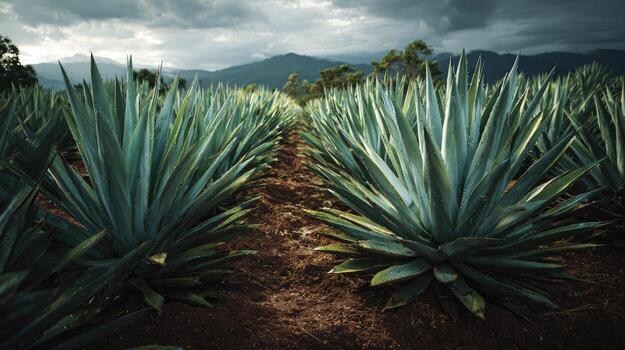
Agave grows in dry soil. Entire years under the sun of Oaxaca, absorbing minerals, enduring drought, storing within itself everything it needs to bloom only once in its lifetime. When it finally rains, the plant responds. And the earth responds. And the air smells of petrichor.
It is in that cycle — of patience, of earth, of rain, and of time — where our mezcal is born.
The process begins when the Espadín agave reaches maturity, between 7 and 10 years after being planted. It is harvested by hand, cooked in an underground stone oven, crushed, naturally fermented, and distilled in a copper still. Every step respects the rhythm of nature. There are no shortcuts.
What remains at the end is a liquid that holds memory. The memory of Oaxacan soil, of slow fire, of the water that once fell on that land and that the agave absorbed for years to give it back to us in the form of mezcal.
That is why it is called Petricor.
Not because it is an elegant name — although it is.
But because it captures exactly what we want you to feel when you open the bottle and bring it to your nose for the first time.
That moment.
That scent.
That connection between the sky and the earth.
Rain that kisses the earth. That is Petricor.